

Context collector
Kill “who owns this?” pings.
Hidden context is expensive: acronyms, old decisions, and ownership maps. Context Collector captures it where questions happen, so onboarding stays fast and incidents rely less on who knows the system.
A shared place for owners and answers.
So fewer “quick questions” turn into escalations.
Make context easy to reuse
Capture acronyms, ownership, escalation paths, and links to runbooks and dashboards. Keep it close to where questions come up, so the team can self‑serve.
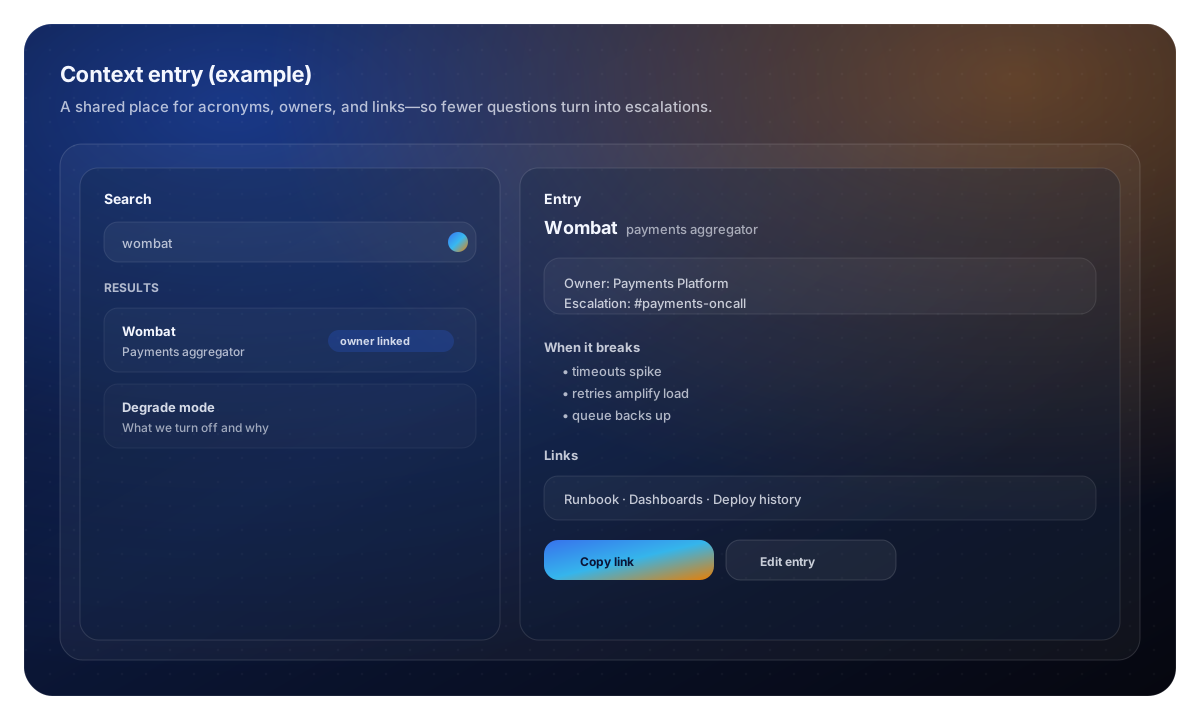
The context that prevents unnecessary escalation.
Small, high-leverage answers that speed up onboarding and reduce escalations.
Acronyms + terminology
Definitions, examples, and where terms show up in the system and runbooks.
Ownership + escalation
Who owns what, when to page them, and what “good handoff” looks like.
Decision history
Why a system works a certain way and what tradeoffs it was designed for.
Close to the questions, not buried in docs.
Capture and retrieve context inside your existing workflow.
Messaging integration
Ask for definitions, owners, or runbook links in your messaging platform and get answers instantly.
Runbook + incident linking
Attach context to the exact runbooks, services, and failure modes where it matters.
Structured entries
Keep entries consistent: definition, owner, links, examples, and “when it breaks” guidance.
Searchable by default
Find the answer fast: acronyms, services, owners, and common incident patterns.
A few entries teams usually need.
Use these as a starter pack to seed the knowledge base.
SLO / SLI / Error budget
What it means for your team, which dashboards matter, and when to escalate.
“Degrade mode”
What we turn off, how we toggle it, and how we verify we’re safe.
Service ownership
Primary owners, backups, vendor contacts, and escalation rules during incidents.
Known gotchas
Common failure patterns, why they happen, and the safest mitigation paths.
Turn on‑call knowledge into something your team can trust.
We map the workflows that create the most interrupts, then ship owned answers with source links and “first checks.” You get a plan you can run while shipping.
Owned answers
Every answer has an owner, source links, and first checks so engineers can verify fast.
Onboarding that scales
New hires self‑serve with the same answers your staff engineers trust.
Less escalation noise
Repeat pings drop because the “right answer” is owned and easy to find.